
Blog
DeepSeek Release: Infrastructure Implications for Open Ecosystems
Analysis of the latest DeepSeek model release, evaluating its architectural efficiency, local inference compatibility, and impact on the open-source agentic landscape.
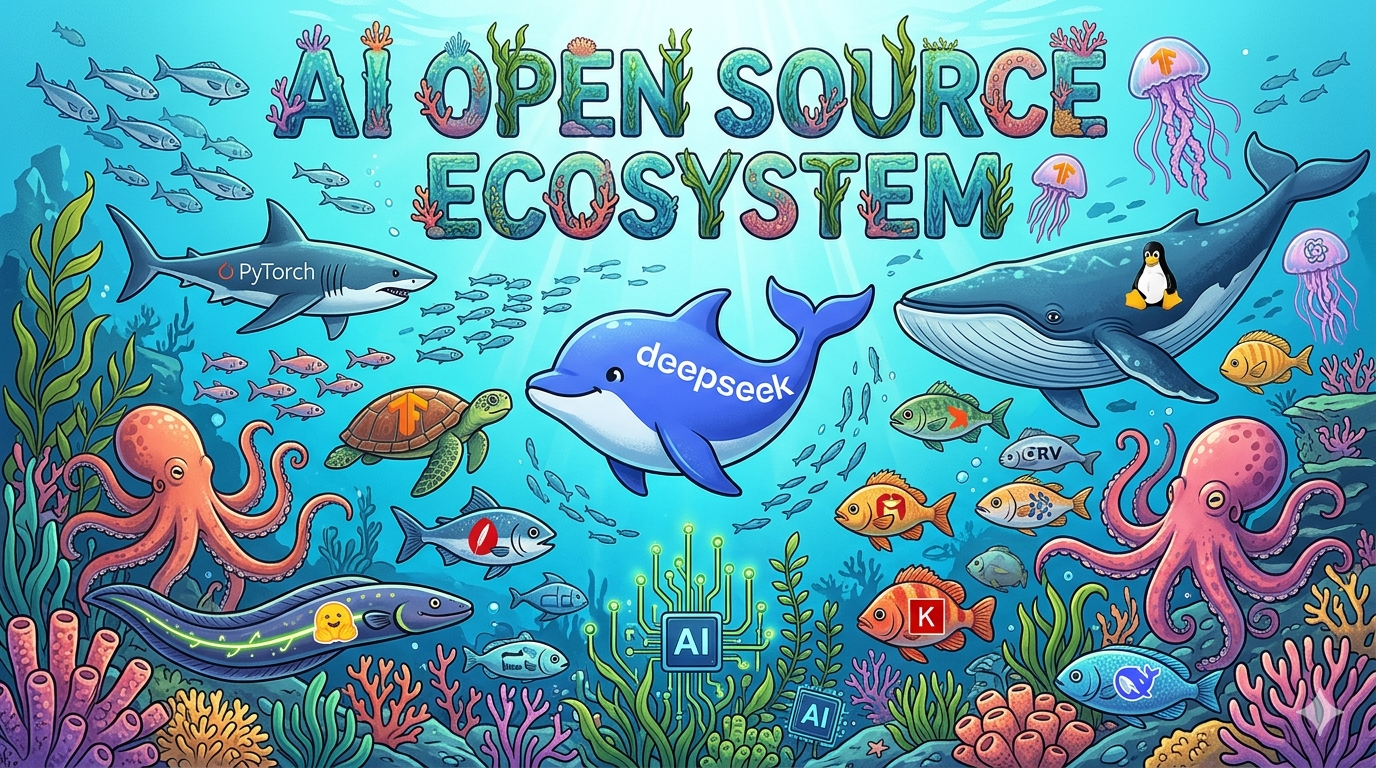
DeepSeek Release: Infrastructure Implications for Open-Weight Ecosystems
The recent release of the new DeepSeek model marks another inflection point in the open-weight model infrastructure layer. Rather than focusing on the model as an autonomous authority, we must analyze its deployment characteristics, efficiency metrics, and integration potential within existing agentic workflows.
Architectural Efficiency and Local Inference
DeepSeek's latest iteration continues the trend of optimizing parameter efficiency for consumer and edge hardware. This aligns with the local-inference-baseline circuit, where language model inference is treated as ordinary local infrastructure rather than a cloud-dependent service. For operators utilizing runtimes like ollama or vllm, the release offers improved context handling and reduced VRAM requirements, facilitating deployment on heterogeneous hardware without reliance on centralized API endpoints.
The architecture prioritizes speculative decoding and quantization compatibility, which are critical for maintaining throughput in production environments. This efficiency gain reduces the barrier to entry for local agent orchestration, allowing more complex reasoning tasks to run on-device without significant latency penalties.
Significance in the Chinese Open-Source Landscape
This release reinforces the trajectory outlined in the chinese-open-source-llm-landscape-2026 circuit. Chinese organizations have established a distinct tier of open-weight model infrastructure that runs parallel to Western development, often competing on cost and efficiency metrics. The availability of these weights supports a multi-polar model ecosystem, reducing dependency on single-vendor proprietary stacks.
For the broader open-source community, this signals continued validation of the open-source-llm-updates-ai-model-releases monitoring pattern. Operators can expect regular updates to the model landscape that prioritize interoperability and open licensing, supporting the nous-research ethos of accessible, inspectable weights.
Ecosystem Impact on Agentic Workflows
The integration of this model into agentic frameworks requires careful consideration of governance and sandboxing. As agents become more capable, the agent-execution-sandboxing-infrastructure circuit becomes increasingly relevant. Deploying high-capability models locally necessitates robust isolation layers to prevent unintended state changes or resource exhaustion.
Frameworks like openclaw and local-first-desktop-agent-orchestration provide the necessary abstraction layers to manage these models safely. By treating the model as a tool within a larger orchestration graph, operators can maintain control over task delegation, memory persistence, and execution boundaries. This approach ensures that increased model capability translates to operational utility rather than increased risk.
Conclusion
The DeepSeek release should be evaluated not as a standalone product, but as a component within the broader open-weight infrastructure. Its value lies in its compatibility with existing local inference stacks and its contribution to a diversified model ecosystem. Operators should prioritize testing within their specific sandbox environments to verify performance claims before integrating into production workflows.
Notes for Editors
- Verify specific parameter counts and context window limits against official release notes before publishing.
- Ensure distinction between proprietary API access and open weights is clear to avoid confusion.
- Contextualize within the broader Chinese open-source infrastructure trend without overstating geopolitical implications.
- Recommend testing with
vllmorollamafor local deployment validation.
Referenced Entries
- Chinese Open-Source Model Infrastructure (chinese-open-source-llm-landscape-2026)
- Ollama (ollama)
- vLLM (vllm)
- Local Inference as Baseline (local-inference-baseline)
- Open Source LLM Updates & AI Model Releases (open-source-llm-updates-ai-model-releases)
- Agent Execution Sandboxing Infrastructure (agent-execution-sandboxing-infrastructure)
- Nous Research (nous-research)
- OpenClaw (openclaw)
- Local-First Desktop Agent Orchestration Infrastructure (local-first-desktop-agent-orchestration)